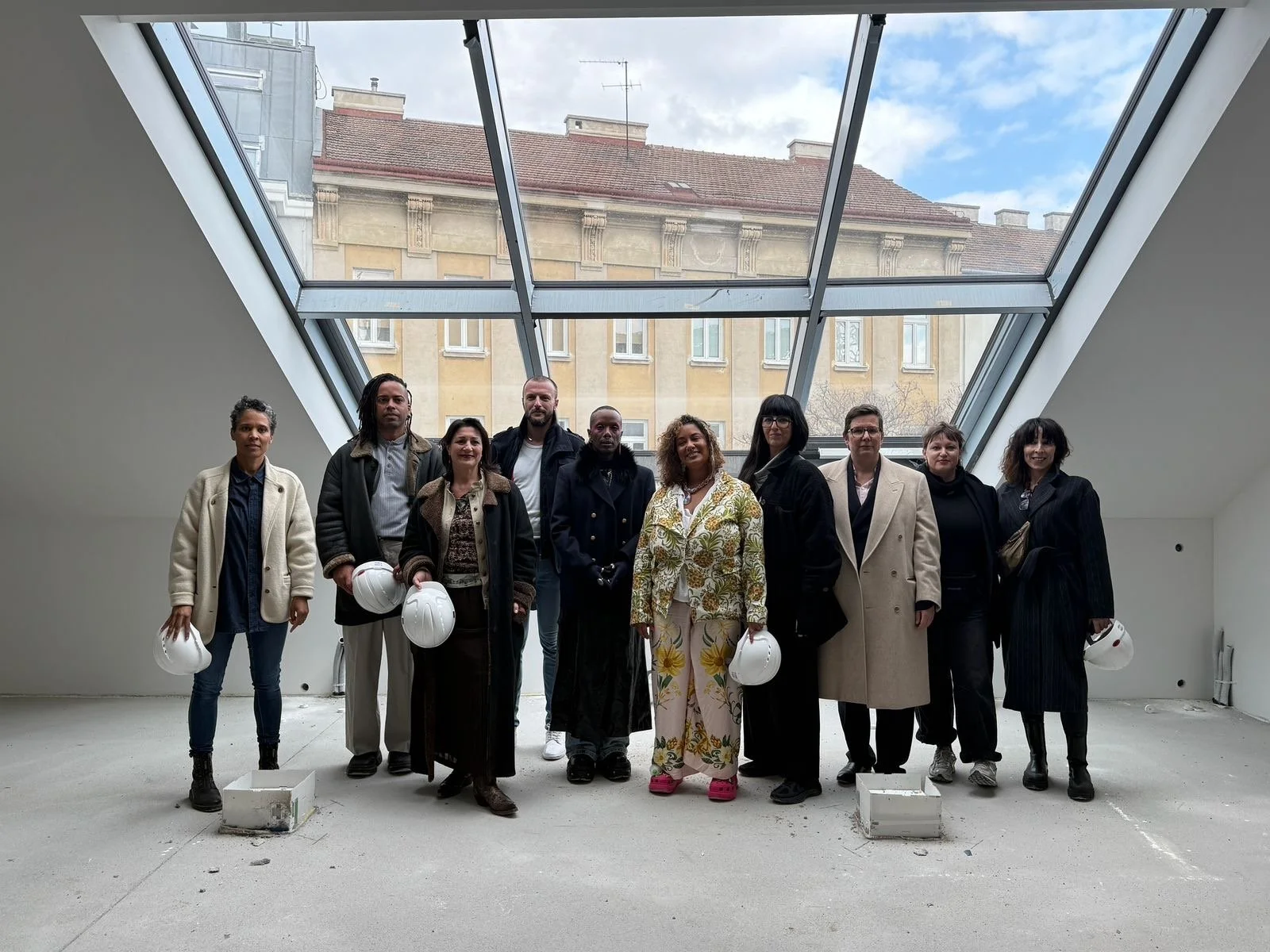
MEZEKƎRƎ is a polyphonic art and culture space for global and diasporic artistic practices located in the attic of the Kenyon Pavilion in the former Sophienspital in Vienna’s Neubau district. The annual program includes exhibitions, performances, concerts, readings, workshops, community events, and international collaborations.
MEZEKƎRƎ is not merely an exhibition space: it is a place of radical hospitality, encounter, and shared learning, a place that connects local artists with international contexts, placing at the center the translocal interconnections that shape our shared present.
The name MEZEKƎRƎ is derived from the Amharic word መዘክር / mäzäkr, which can refer to practices of gathering, preserving, and healing. መዘክር honors that which refuses to be forgotten.
MEZEKƎRƎ is the evolution of Kültür gemma!, which has been supporting migrant and BIPoC artists for 13 years through grants, fellowships, and mentoring. The new space opens up expanded possibilities: artist residencies, accessible exhibition spaces, and a library with resources for artistic practice.
MEZEKƎRƎ creates a translocal space that places diasporic and migrant perspectives at the center conceptually, substantively, and aesthetically. In doing so, it challenges a canon that has systematically suppressed and delegitimized the knowledge and artistic traditions of the Global Majority. In opposition to extractive and neoliberal diversity policies and to aesthetic regimes that demand legibility and assimilation from racialized and migrant subjects, MEZEKƎRƎ articulates an affirmative stance. A caring space built on the foundations of care, conviviality, memory work, epistemic diversity, and the endurance of contradictions, which resists both appropriation and erasure in equal measure.
The space is designed and led by artists who predominantly identify themselves as members of the Global Majority, and seeks to learn: from and with artistic and activist traditions that have long operated outside the mainstream and remained resistant despite institutional ignorance. MEZEKƎRƎ aims to make global connections, aesthetic genealogies, and artistic contexts visible. Those that lie far in the past and still have an impact; those that are; and those that could be.